Revenue Realization
Rebuilding an obsolete revenue-tracking experience for JPMorgan’s deal teams and shifting how the design org builds along the way.
Lead Designer
·
2025–2026
·
JPMorganChase, Global Banking Design
·
Fintech · Enterprise · AI
Rebuilt a 20-year-old revenue tracking process inside JPMorgan’s new banking platform, and taught the design org to prototype in code.

Revenue realization confirms that closed deals actually deliver the revenue they were sold on. I led its redesign onto the iQ platform, gave deal teams product-level visibility they’d never had, and, midway through, moved the whole team’s prototyping into code with AI.
The problem
The Deal Control Team was dependent on a tool built over 20 years ago; Commercial Banking’s Business Managers followed a different process entirely. Reviews were manual: email, spreadsheets, and offline conversations. At year-end, one manager I spoke to spent a full day just reconstructing where revenue stood.

Grounding in the real process
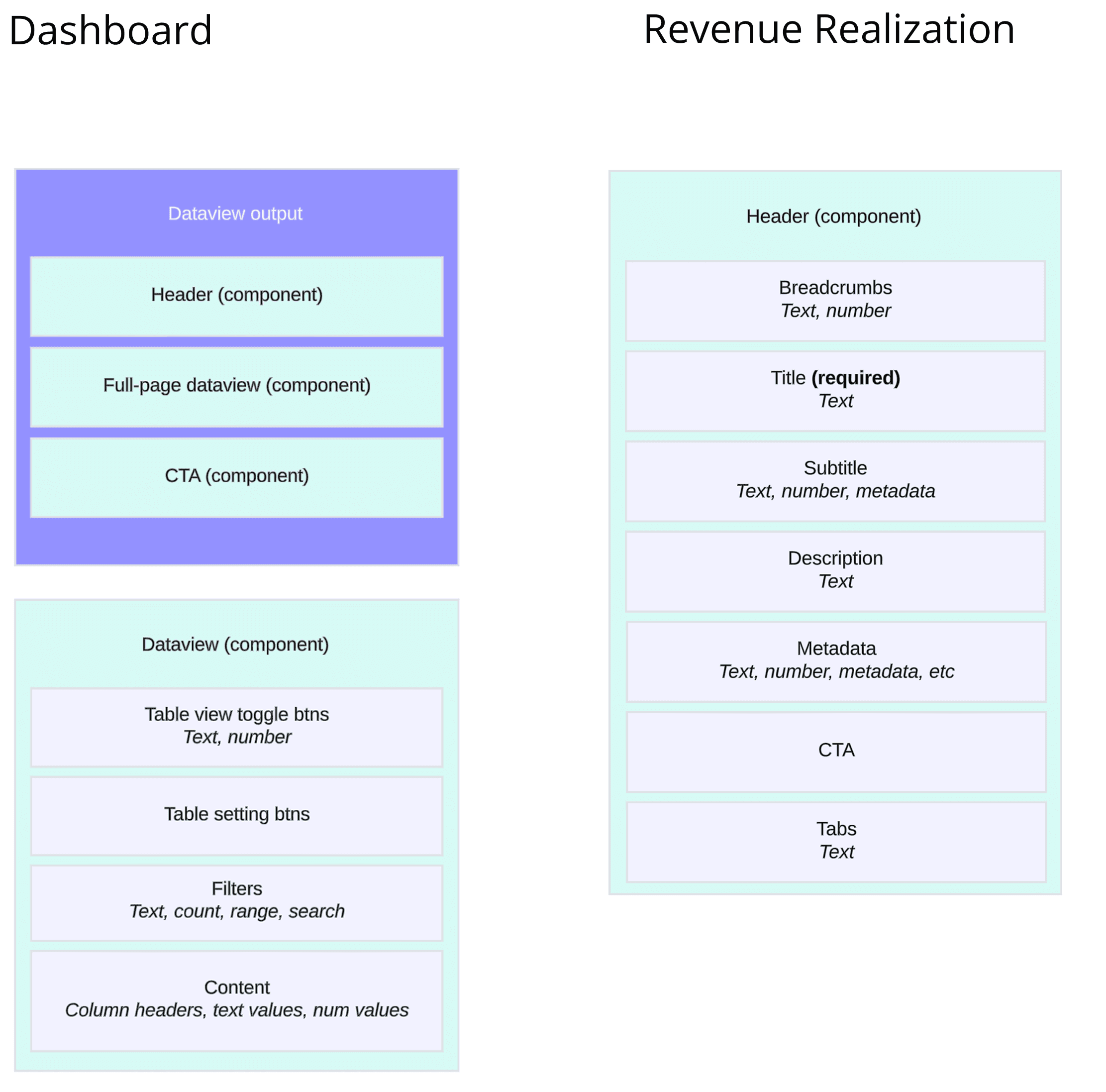
Deal data is confidential, so I ran shadowing sessions with the deal control team as well as Treasury Management Officers (TMOs). I also worked closely with a content designer from day one, modeling the content types that are displayed and how they related before drawing a single screen.

The reframe that changed the design
Mid-project, we caught the comment drawer covering the exact data reviewers needed to read. We treated that as proof the interaction model was wrong and rebuilt so analysis and annotation stay visible together.
When we look at it, it’s hiding some of the crucial information you have on the screen.
Jomana
Deal Control Team Manager
Showing how, not just whether
When presenting concepts, the Deal Control Team expressed the need not only to see whether a deal was realizing; they wanted to know how it was realizing. They needed to see percentages at the product level: which products inside a deal were carrying it, and which were dragging.
I created a new visual treatment so users could quickly gauge at a high level how many products made up a deal and the status of each of those products, without having to dive into the details of each deal.

The colors make sense! I like where this is heading. This is really cool!
Deal Control Team member
JPMorganChase
Moving prototyping into code
Figma could show what a table looked like, not what it felt like to sort, filter, and watch real data respond. I built prototypes directly in VSCode with GitHub Copilot, wired to real development data. Stakeholder conversations flipped from “what will this look like?” to “this is what we need to build.”

Bringing the org with me
Rather than keep the method to myself, I designed and led a AI-Asssited Prototyping session teaching it to more than 200 designers and leaders across six offices: Palo Alto, San Francisco, New York, Chicago, London, and Glasgow.

Jason, you smashed it. The turnout was insane. I’ve never seen that before.
Hendrix Timu
Head of L&D, CIB Experience Design
Impact
The realization experience has rolled out to Global Corporate Banking, with new features now validated as prototypes built through AI-assisted coding before any production code is written. New features for the Commerical Banking line of business are soon to be released.

What I’d carry forward
Capture everything: you never know what will resonate upstream. What started as a routine user session ended up quoted in leadership presentations. And AI-assisted coding changed who could participate, not just how fast I worked, because stakeholders could handle a working prototype instead of reading a spec.